



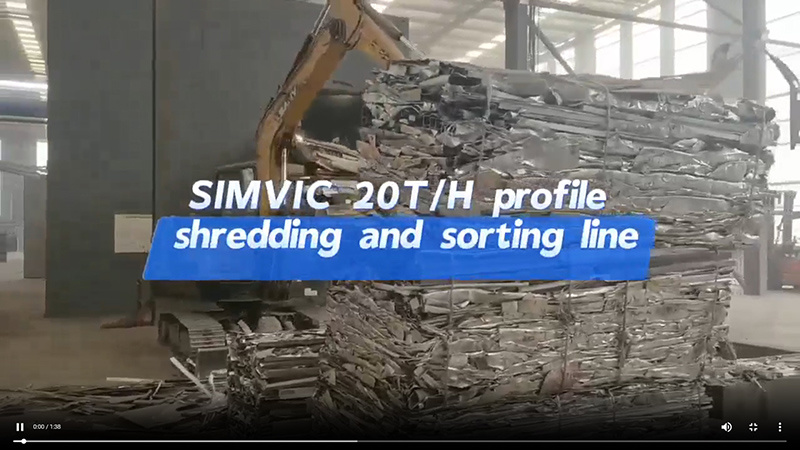
Aluminum recycling
1. Solution Overview
SIMVIC Group delivers more than recycling equipment—we engineer complete aluminum recycling plants designed for maximum resource recovery, operational efficiency, and long-term profitability.
As a System Engineering-driven Plant Builder, we integrate process engineering, equipment manufacturing, automation, intelligent sorting, environmental protection, and lifecycle services into fully customized turnkey solutions for the global secondary aluminum industry.
Driven by lightweight vehicle manufacturing, electric mobility, urban redevelopment, and the rapid growth of beverage packaging, aluminum has become one of the world’s fastest-growing recyclable metals. Compared with primary aluminum production, recycling aluminum can reduce energy consumption by up to 95%, making high-quality recycled aluminum an increasingly strategic raw material for modern aluminum smelters.
However, aluminum scrap varies significantly in shape, alloy composition, contamination level, and material origin. Aluminum profiles, cast aluminum, and used beverage cans (UBC) each require dedicated process routes and equipment configurations to achieve maximum recovery efficiency and product value.
Based on the characteristics of each feedstock, SIMVIC optimizes the coordination of Material Flow, Energy Flow, and Control Flow, integrating pre-processing, conveying, shredding, size classification, magnetic separation, eddy current separation, sensor-based sorting, alloy identification, dust collection, and intelligent automation into one highly efficient processing system.
Our objective extends beyond maximizing aluminum recovery. We help customers produce premium-quality secondary aluminum products that meet international trading standards and smelting specifications, enabling higher product value, lower operating costs, and sustainable long-term returns on investment.
2. Target Feed Materials
SIMVIC provides customized process solutions for a wide range of aluminum scrap sources. By combining modular plant design with advanced sorting technologies, we maximize aluminum liberation, separation efficiency, and product value across different feed materials.
Aluminum Profiles
Typical Materials
- Architectural aluminum profiles
- Window and door frames
- Industrial extrusion profiles
- Curtain wall systems
- Thermal-break aluminum profiles
Characteristics
- Low contamination
- Stable alloy composition
- High commercial value
- Ideal for high-purity wrought aluminum recovery
- Engine blocks
- Cylinder heads
- Transmission housings
- Aluminum wheels
- Die-cast components
- Pump housings and machinery parts
- Thick-wall components
- High silicon content
- Alloy classification required
- High melting value
Used Beverage Cans (UBC)
Typical Materials
- Beverage cans
- Aluminum packaging
- Consumer aluminum containers
Characteristics
- Thin-gauge material
- Large processing volumes
- Strict impurity control requirements
- Ideal for closed-loop Can-to-Can recycling
Aluminum from ELV Recycling
Typical Materials
- Automotive aluminum components
- Aluminum wheels
- Engine parts
- Radiators
- Structural aluminum parts
Characteristics
- Mixed with steel, copper and plastics
- High liberation requirements
- Easily integrated into ELV recycling plants
Aluminum from WEEE Recycling
Typical Materials
- Household appliances
- Air conditioners
- Refrigerators
- Washing machines
- IT equipment
Characteristics
- Complex material composition
- Multiple metal fractions
- Ideal for multi-sensor sorting technologies
Because aluminum scrap differs greatly in size, density, alloy composition, and contamination level, no single processing route fits every application. SIMVIC designs each recycling plant according to the customer’s feedstock characteristics, combining modular equipment and intelligent automation to maximize recovery, purity, and overall resource value.
3. Typical Process Flow
Different types of aluminum scrap require different processing technologies. Based on the characteristics of each feed material, SIMVIC develops customized process flows to maximize aluminum recovery, product purity, and overall plant efficiency.
① Aluminum Profile Recycling Process
Typical Feed Materials:
Architectural aluminum profiles | Window & door frames | Industrial extrusion profiles | Curtain wall systems | Thermal break aluminum profiles
Typical Process Flow:
Aluminum Profile Receiving
➡️ Manual Pre-sorting(Removal of oversized and unwanted materials)
➡️ Double Shaft Shredder(Primary Size Reduction & Bale Opening)
➡️ SIMVIC SHC Metal Shredder(Deep Liberation of Aluminum)
➡️ Air Separation System(Removal of plastics, rubber, foam and other light materials)
➡️ Magnetic Separation System(Ferrous Metal Removal)
➡️ Particle Size Classification(Accurate Size Grading)
➡️ Eddy Current Separation(Recovery of High-purity Non-ferrous Metals)
➡️ XRT / XRF Intelligent Sorting(Removal of high-density impurities and aluminum alloy classification)
➡️ Automatic Baling & Storage
➡️ High-purity Recycled Aluminum Products
System Engineering Value of Each Process
| Process Stage | System Engineering Value |
|---|---|
| Manual Pre-sorting | Removes oversized contaminants to protect key equipment and ensure uninterrupted plant operation. |
| Double Shaft Shredder | Opens compressed bundles and performs primary size reduction, creating a consistent feed for downstream shredding. |
| SIMVIC SHC Metal Shredder | Maximizes aluminum liberation by separating aluminum from attached materials, laying the foundation for high-efficiency sorting. |
| Air Separation System | Removes plastics, rubber, dust and other light contaminants, improving downstream efficiency and final product purity. |
| Magnetic Separation System | Removes ferrous contaminants, minimizing interference with downstream non-ferrous recovery. |
| Particle Size Classification | Accurately classifies materials by size, balancing plant throughput and optimizing downstream performance. |
| Eddy Current Separation | Efficiently recovers aluminum and other non-ferrous metals while minimizing valuable metal losses. |
| XRT / XRF Intelligent Sorting | Removes copper, zinc, stainless steel and other heavy contaminants while enabling aluminum alloy classification for higher product value. |
| Automatic Baling & Storage | Produces standardized, high-density bales that reduce transportation and storage costs while meeting international smelter and trading requirements. |
Recovered Products
Wrought Aluminum Scrap | Secondary Aluminum Feedstock | Aluminum Alloy Fractions | Recovered Ferrous Metals | Light Non-metal Fractions
② Cast Aluminum Recycling Process
Typical Feed Materials:
Engine blocks | Transmission housings | Aluminum wheels | Die-cast aluminum components
Typical Process Flow
Cast Aluminum Receiving
➡️ Manual Pre-sorting(Removal of oversized and unwanted materials)
➡️ SIMVIC SHC Metal Shredder(Deep Liberation of Aluminum)
➡️ Magnetic Separation System(Ferrous Metal Removal)
➡️ Particle Size Classification(Accurate Size Grading)
➡️ High-intensity Magnetic Drum(Removal of Fine Ferrous Particles and Composite Iron)
➡️ Eddy Current Separation(Recovery of High-purity Non-ferrous Metals)
➡️ XRT / XRF Intelligent Sorting(Removal of high-density impurities and aluminum alloy classification)
➡️ Automatic Baling & Storage
➡️ High-purity Cast Aluminum Products
System Engineering Value of Each Process
| Process Stage | System Engineering Value |
|---|---|
| Manual Pre-sorting | Removes oversized contaminants and unwanted materials to protect key equipment and maintain stable plant operation. |
| SIMVIC SHC Metal Shredder | Achieves deep liberation of cast aluminum from steel, rubber and other attached materials, maximizing metal recovery. |
| Magnetic Separation System | Efficiently removes ferrous metals, improving downstream separation efficiency and product quality. |
| Particle Size Classification | Optimizes material flow according to particle size, balancing equipment loads and maximizing plant throughput. |
| High-intensity Magnetic Drum | Recovers fine ferrous particles and composite iron, further reducing iron contamination and improving aluminum purity. |
| Eddy Current Separation | Efficiently separates aluminum from non-metallic materials, maximizing non-ferrous recovery and resource utilization. |
| XRT / XRF Intelligent Sorting | Removes copper, zinc, stainless steel and other dense contaminants while enabling aluminum alloy classification for higher-value products. |
| Automatic Baling & Storage | Produces standardized, high-density bales for efficient transportation, storage and furnace charging. |
Recovered Products
Cast Aluminum Scrap | Secondary Aluminum Feedstock | Aluminum Alloy Fractions (Optional) | Recovered Ferrous Metals
Recovered Copper & Zinc Fractions | Light Non-metal Fractions
③ UBC (Used Beverage Can) Recycling Process
Typical Feed Materials:
Baled UBCs | Aluminum beverage cans | Aluminum packaging scrap
Typical Process Flow
UBC Receiving
➡️ Manual Pre-sorting & Impurity Removal
➡️ Double Shaft Shredder(Primary Size Reduction & Bale Opening)
➡️ SIMVIC SHC Metal Shredder(Secondary Shredding & Material Liberation)
➡️ Flip-flow Screen(Removal of Fines and Small Impurities)
➡️ Magnetic Drum(Ferrous Metal Removal)
➡️ Trommel Screen(Particle Size Classification)
➡️ Eddy Current Separation(Recovery of High-purity Aluminum)
➡️ Automatic Baling
➡️ Furnace-ready UBC Scrap
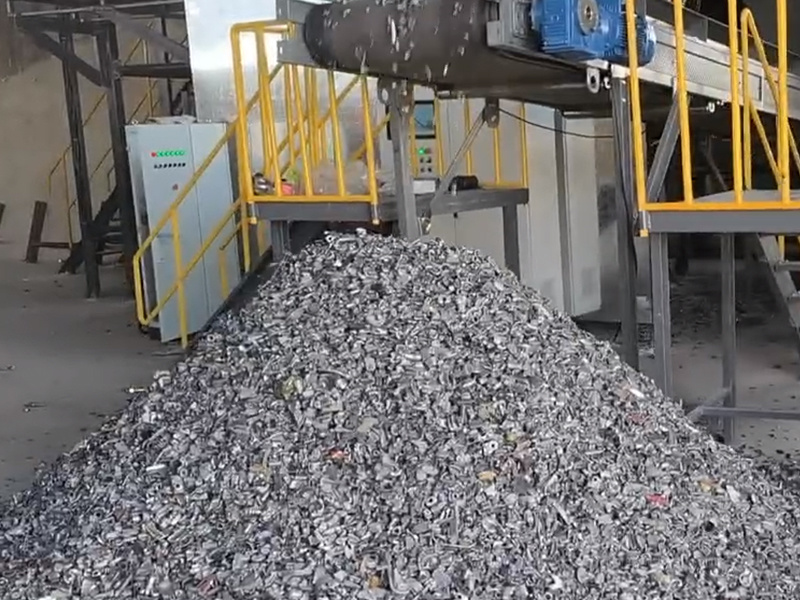
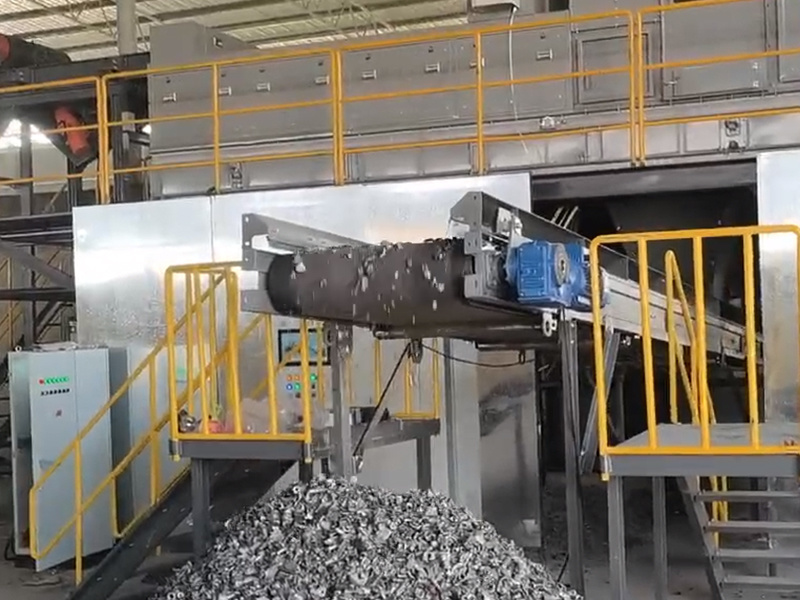
SIMVIC optimizes the entire recycling process based on the unique characteristics of UBC scrap, including its lightweight structure, low bulk density and coated surfaces. By integrating primary shredding, deep material liberation, precision screening, magnetic separation and high-efficiency eddy current separation, the system effectively separates aluminum from ferrous metals, fines and non-metallic contaminants, producing furnace-ready UBC scrap that meets international secondary aluminum smelting standards while maximizing resource value and product consistency.
Recovered Products
Furnace-ready UBC | Clean Aluminum Scrap
Process Design Principles
SIMVIC follows a systematic engineering approach throughout the design of every aluminum recycling plant, focusing on:
- Maximizing aluminum liberation
- Maximizing aluminum recovery
- Maximizing product purity
- Minimizing metal loss
- Reducing processing cost per ton
- Meeting international furnace feedstock specifications
UBC Recycling Plant Case | 5 TPH Crushing & Sorting Line
Capacity: 5 TPH | Aluminum Recovery: >95% | Aluminum Purity: >99.5%
Typical Process Flow
➡ Twin-Shaft Shredder | Opens compressed UBC bales.
➡ SIMVIC SHC-3050 Crusher | Efficient crushing and aluminum liberation.
➡ Flip-Flow Screen | Removes fines and impurities below 4 mm.
➡ Magnetic Separator | Removes ferrous materials.
➡ Trommel Screen | Size classification with oversized recirculation.
➡ Eddy Current Separator | >95% aluminum recovery with aluminum, steel, and plastic separation.
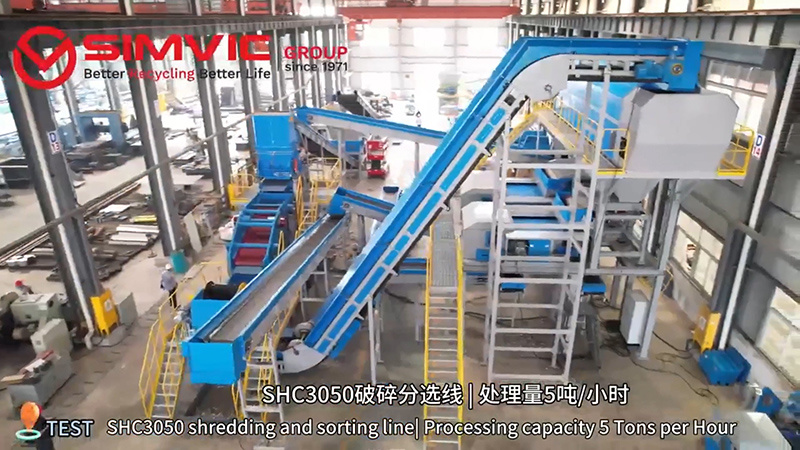
The integrated process delivers stable throughput, high aluminum purity, and furnace-ready recycled aluminum with reliable long-term performance.
UBC Recycling Plant Case | 5 TPH Crushing & Sorting Line
Capacity: 5 TPH | Aluminum Recovery: >95% | Aluminum Purity: >99.5%
Typical Process Flow
➡ Twin-Shaft Shredder | Opens compressed UBC bales.
➡ SIMVIC SHC-3050 Crusher | Efficient crushing and aluminum liberation.
➡ Flip-Flow Screen | Removes fines and impurities below 4 mm.
➡ Magnetic Separator | Removes ferrous materials.
➡ Trommel Screen | Size classification with oversized recirculation.
➡ Eddy Current Separator | >95% aluminum recovery with aluminum, steel, and plastic separation.
The integrated process delivers stable throughput, high aluminum purity, and furnace-ready recycled aluminum with reliable long-term performance.
4. Scope of Supply
SIMVIC supplies individual machines, process modules, or complete EPC turnkey recycling plants.
Feed Preparation
- Feeding Systems
- Manual Sorting Platforms
- Hydraulic Shears
- Pre-shredders
Environmental Systems
- Dust Collection
- Air Separation
- Noise Control
- Exhaust Gas Treatment
Intelligent Automation
- PLC Control
- SCADA Platform
- MES Data Management
- Remote Diagnostics
5. Recovered Products
SIMVIC focuses not only on processing performance but also on maximizing the commercial value of recovered aluminum products.
Typical output products include:
High-Purity Wrought Aluminum Scrap
Ideal for extrusion, rolling, and profile production.
Furnace-ready UBC Scrap
Designed for closed-loop Can-to-Can recycling.
High-value Aluminum Alloy Fractions
Recovered through XRT, XRF, and AI Vision technologies, including:
- 5xxx Series Aluminum
- 6xxx Series Aluminum
- Cast Aluminum Alloys
- High-Silicon Aluminum
- Low-Copper Aluminum
Recovered Non-Ferrous Metals
- Copper
- Brass
- Stainless Steel
- Zinc
- Magnesium
- Copper-Aluminum Composites
Recovered Non-Metal Fractions
- Plastics
- Rubber
- Foam
- Wood
- Dust
Light fractions can be further processed into RDF (Refuse-Derived Fuel) or SRF (Solid Recovered Fuel) to support circular resource utilization.
6. Performance Targets
Each recycling plant is customized according to feedstock composition and market requirements.
Typical objectives include:
| Performance Indicator | Target |
|---|---|
| Aluminum Recovery | Maximized |
| Product Purity | Furnace & International Trading Standards |
| Metal Loss | Minimized |
| Automation Level | Highly Automated |
| Labor Requirement | Significantly Reduced |
| Processing Cost per Tonne | Optimized |
| Plant Availability | Long-term Stable Operation |
Value Indicators
- Higher aluminum product value
- Premium furnace feedstock
- Lower energy consumption
- Reduced labor costs
- Lower logistics costs
- Stronger market competitiveness
7. Environmental & HSE
Environmental protection, operational safety, and occupational health are fully integrated into every SIMVIC recycling plant.
Environmental Protection
- High-efficiency dust collection
- Enclosed conveying systems
- Source dust control
- Exhaust gas treatment
- Noise reduction
Occupational Health
- Reduced dust exposure
- Lower noise levels
- Improved working environment
- Reduced manual sorting
Sustainability
By increasing aluminum recycling efficiency while reducing primary aluminum production, SIMVIC helps customers achieve ESG objectives and accelerate the transition toward a circular economy.
8. Reference Plants
SIMVIC provides tailored solutions for various aluminum recycling applications.
Aluminum Profile Recycling Plants
Designed for demolition contractors and profile recyclers.
UBC Recycling Plants
Designed for beverage packaging recyclers and municipal recycling centers.
9. Service & Expansion
SIMVIC provides comprehensive lifecycle services covering every stage of the project.
Project Development
- Feedstock Analysis
- Alloy Assessment
- Process Engineering
- Investment Evaluation
Plant Support
- Remote Technical Support
- Spare Parts Supply
- Process Optimization
- Production Data Analysis
Future Expansion
The modular SIMVIC platform enables customers to expand capacity as market demand evolves.
Expansion options include:
- AI Alloy Recognition
- Online XRF Alloy Sorting
- High-purity Aluminum Upgrading
- Closed-loop UBC Recycling
- Aluminum Dross Recovery Systems
10. SIMVIC System Engineering Value
In modern aluminum recycling, sustainable competitive advantage is not created by a single machine—it is achieved through the seamless integration of the entire processing chain.
By combining feed preparation, shredding, size classification, intelligent sorting, environmental protection, and digital automation into one coordinated system, SIMVIC optimizes Material Flow, Energy Flow, and Control Flow throughout the plant.
The result is higher aluminum recovery, superior product purity, lower operating costs, and stronger long-term profitability, enabling customers to transform aluminum scrap into premium secondary raw materials for the global market.

Contact Our Engineers
Get an Integrated Plant Solution
Request Technical Information
Provide material type, capacity, and project details to receive a tailored solution.