

Hydraulic Scrap Metal Baler (Lid Type) —— The “Logistics Optimization Hub” and “Standardization Terminal” of the Scrap Metal Value Chain
Range: Main pressing force: 200 - 800 tons
Application: ELV recycling plants, mixed metal recycling plants, aluminum recycling plants, motor recycling plants, WEEE recycling and industrial scrap processing centers
The hydraulic scrap metal baler acts as a “terminal value amplifier” within the plant system. Its role goes beyond compression—it reshapes the physical form of processed materials. Through multi-stage hydraulic compression, loose, irregular scrap is transformed into high-density, standardized bales, achieving volume reduction and densification.From a system engineering perspective, it converts unstable bulk flow from upstream processes into standardized product units, optimizing logistics, storage, and trading efficiency.
Process synergy:
1. Upstream adaptability: Handles diverse feed materials from shredding, shearing, and sorting systems (light scrap, structures, car bodies), ensuring stable output despite feed fluctuations.
2. Downstream empowerment: High-density bales improve transport efficiency and meet smelter requirements for furnace charging, enhancing melting efficiency and metal yield.
3. System integration value: Integrated into the central control system via PLC, enabling seamless coordination with conveying, weighing, and storage systems, forming a closed-loop from processing to commercial delivery.
Main pressing force: 200 / 300 / 400 / 600 / 800 tons;
Bale size: 400×400 / 500×500 / 600×600 / 700×700 mm;
Cycle time: approx. 120 s;
Chamber length: 1500–3500 mm

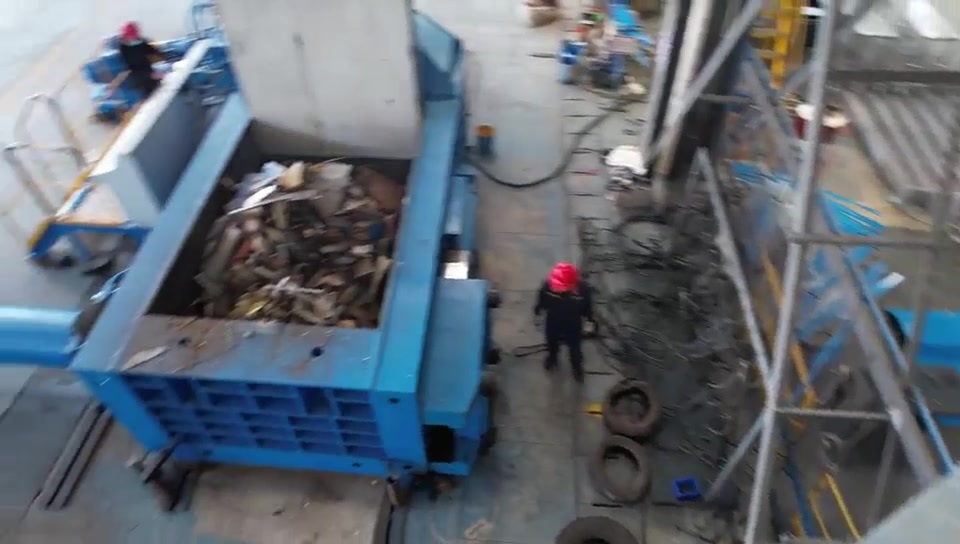
Integrated high-density compaction and standardized output
1. High-tonnage hydraulic system: Multi-stage compression ensures dense and uniform bales. System benefit: reduces transport cost and improves stacking efficiency.
2. Large feeding chamber: Handles bulky scrap and full structures directly. System benefit: reduces upstream preprocessing load and stabilizes throughput.
3. Intelligent hydraulic control: Pressure-compensated staged compression reduces energy consumption. System benefit: improves energy efficiency without compromising performance.
4. Wear-resistant modular design: Key components are replaceable and durable. System benefit: minimizes downtime and ensures high uptime.
5. System-level data integration: Enables remote monitoring and production tracking. System benefit: supports plant-wide optimization and prevents downstream bottlenecks.
Application Reality
Hydraulic Scrap Metal Baler
All features of the SIMVIC product line for maximum durability, performance, efficiency and maintainability


Contact Our Engineers
Get an Integrated Plant Solution
Request Technical Information
Provide material type, capacity, and project details to receive a tailored solution.